The Older I Get the Less Interested I Am in Weighing Less

By Erica Noggle • Scarlet Faith Fitness
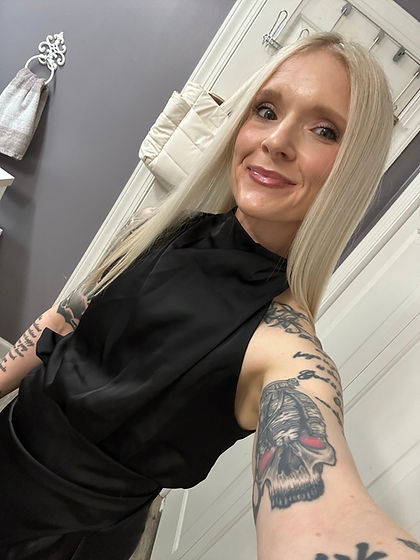
It’s my 38th birthday… and the older I get, the less interested I am in weighing less just for the sake of weighing less.
Physiologically, aging gives us a much bigger reason to protect muscle than to continuously chase our lowest body weight. A lower number on the scale doesn’t tell us what we lost to get there. It can’t tell us how much muscle we’re maintaining or how strong we’re becoming.
When women are told that smaller is always better, those questions get pushed aside. They deserve to be part of the conversation.
Muscle can become harder to maintain with age
Age-related anabolic resistance means skeletal muscle can become less responsive to a protein stimulus. This has been observed in older adults, including research comparing men in their 70s with men in their 20s. Turning 38 doesn’t automatically mean someone has anabolic resistance. [1]
Getting older makes preserving and building muscle MORE important. Constantly pursuing a smaller body can leave that priority out of the picture. The question is whether the way we eat and train supports the muscle we want to keep.
Menopause changes the body composition conversation
During the menopause transition, fat gain can accelerate while lean mass declines. In the Study of Women’s Health Across the Nation, those changes occurred without an acceleration in the rate of weight gain. [2]
The scale can stay similar while the tissue underneath it changes significantly. That’s why body weight alone gives us an incomplete picture. This is a reason to think ahead about muscle throughout adulthood, rather than assuming a familiar number on the scale means everything underneath it has stayed the same.

Muscle is metabolic tissue
Skeletal muscle is a major site of insulin-mediated glucose disposal and plays an important role in glucose regulation and metabolic health. In everyday terms, muscle helps take glucose out of the bloodstream and use or store it. [3]
Building muscle isn’t just about looking “toned.” When we talk about muscle only in terms of appearance, we leave out what it does. Protecting that tissue matters even when its benefits aren’t something you can see in a progress photo.
Constant dieting can work against the tissue you’re trying to protect
Energy restriction can mean losing lean tissue alongside body fat. Adequate protein and resistance training help support muscle preservation during weight loss. Research has found that resistance training can preserve fat-free mass during dieting, and that resistance exercise with protein can support muscle protein synthesis during a short-term energy deficit. [4, 5]
Getting lighter at the expense of muscle isn’t automatically a healthier outcome. A lower body weight by itself doesn’t answer whether the approach is supporting strength. If every decision is about eating less or making the scale move faster, preserving muscle can become an afterthought.
Strength becomes increasingly valuable as we age
Resistance training supports muscle mass and strength. A 2025 trial in previously untrained, premenopausal women found improvements in lean mass and strength after twelve weeks of combined resistance and interval training. Research in postmenopausal women with low bone mass has also shown benefits for bone density and physical function from supervised resistance and impact training. [6, 7]

The goal shouldn’t only be fitting into a smaller pair of jeans. It should also be building a body capable of carrying you through the next several decades.
Another year older does NOT make me want to eat less. It makes me want to protect the things aging naturally tries to take away like muscle, strength, bone, and function.
Maybe women have spent enough time being taught to fear taking up more space. At this stage of life, I’d be much more concerned about losing muscle than gaining a few pounds while building it.


Comments